
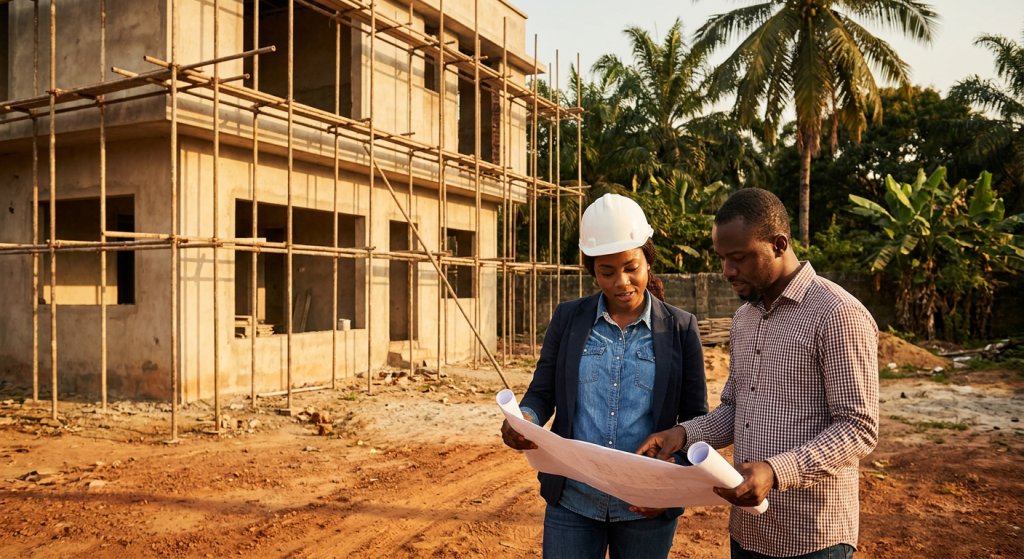
You've spent years working abroad, saving diligently, and dreaming of the day your family home stands proud on that plot in Lekki, Abuja, or Enugu. You've done your research, spoken to relatives back home, and a contractor has given you a figure that sounds reassuring. You wire the first instalment with confidence.
Three years later, the building is at lintel level, your budget is exhausted, and no one can give you a straight answer about where the money went.
This is not an unusual story. It is, in fact, the default experience for diaspora Nigerians funding construction projects from abroad — and the tragedy is that almost none of it is inevitable. The real cost of building a house in Nigeria isn't simply in the materials and labour. It is buried in exchange rate swings, contractor padding, undefined project scopes, and a dozen other variables that no one mentions before you make that first transfer.
This guide exists to change that.
The Exchange Rate Problem Nobody Accounts For
When diaspora homebuilding Nigeria projects go wrong, the naira exchange rate is almost always one of the first culprits. Most people lock their budget in their earnings currency — pounds, dollars, or euros — and convert at the rate available when they begin planning. What they fail to account for is that construction projects in Nigeria routinely take 18 to 36 months, sometimes longer.
The naira has depreciated significantly against major currencies over recent years. A budget set at ₦1,500 to the pound in January can look entirely different by December. If your contractor is pricing materials in naira — which they are — and naira weakens against your sending currency, you might feel as though you are getting more. But the reverse has equally happened, and even when the rate appears favourable, local inflation in building materials can wipe out any currency gain almost overnight.
What to Do Instead
- Price your project in naira from day one. Understand the full Nigerian construction budget in local currency terms, not your home currency equivalent.
- Build a 20–25% currency fluctuation buffer into your total budget before a single brick is laid.
- Stagger your transfers. Rather than sending large lump sums, consider phased transfers timed to project milestones, so you are not converting at a single disadvantageous rate.
Why Your ₦50 Million Isn't Going as Far as You Were Told
The cost of building a house in Nigeria is consistently underquoted at the early enquiry stage. This is partly due to well-meaning relatives who price based on what things cost three years ago, and partly because some contractors deliberately provide low estimates to secure a client's commitment before the real costs emerge.
A mid-range three-bedroom bungalow in Lagos or Abuja, built to a decent finish, currently costs between ₦60 million and ₦120 million depending on design complexity, location, and finishes — and that range assumes reasonable supervision and no major contractor issues. A detached four-bedroom duplex can easily run from ₦150 million upwards.
Those figures surprise most diaspora clients, because they were told something very different. Here is what the quoted price rarely includes:
Hidden Costs That Consume Diaspora Construction Budgets
1. Site preparation and infrastructure
Land in Nigeria rarely arrives ready to build on. Clearing, fencing, borehole sinking, sewage provision, and sometimes road access can add ₦5–15 million before a foundation is poured.
2. Government approvals and documentation
Building plan approvals, LASG permits in Lagos, FCT approvals in Abuja, and environmental impact assessments are non-negotiable legal requirements. Expediting these through legitimate channels costs money and time.
3. Material price escalation
Cement, steel, tiles, and timber prices in Nigeria fluctuate sharply with import policy changes and fuel costs. A contractor who quoted you a price based on last quarter's rates may legitimately need to re-price mid-project — but they rarely tell you this upfront.
4. Generator and electrical infrastructure
Power instability is a fact of Nigerian construction. Running a site generator, wiring for inverter systems, and installing adequate electrical infrastructure for a modern home adds considerable cost.
5. Supervision gaps
When you are thousands of miles away, without professional oversight, work quality suffers and material wastage rises. Some contractors rely on this distance. The cost of poor supervision isn't a line item — it shows up in rework, structural defects, and inflated material requests.
Contractor Fraud and How to Protect Yourself
Building in Nigeria from abroad without professional oversight is one of the highest-risk financial decisions a diaspora investor can make. The most common forms of contractor fraud include:
- Ghost materials — invoicing for materials never delivered to site
- Grade substitution — using lower-grade steel or cement while billing for premium specification
- Abandoned projects — disappearing after mobilisation fees are received
- Deliberate slow-pacing — stretching timelines to justify repeated top-up requests
None of this requires you to assume that everyone is dishonest. It simply requires that you build a system where dishonesty becomes difficult.
Building Accountability Into Your Project
- Engage an independent project manager or architect who represents your interests, not the contractor's.
- Tie all payments to verified milestone completions, supported by photographic evidence and site reports.
- Insist on a detailed Bill of Quantities (BoQ) before signing any contract. Any contractor resistant to providing one is a contractor worth avoiding.
- Use a Nigerian-registered legal entity or trusted escrow-style payment process wherever possible.
This is precisely the gap that firms like Imprexi Architecture & Construction exist to fill — providing diaspora clients with qualified, on-the-ground professional representation that ensures funds are deployed correctly, work is properly supervised, and the client's vision is protected at every stage.
How to Build a Realistic Nigeria Construction Budget
A robust diaspora property investment Nigeria budget should account for the following cost categories:
| Category | Typical % of Total Budget |
|---|---|
| Structural works (foundation to roof) | 40–50% |
| Finishes (tiles, plastering, painting) | 20–25% |
| MEP (mechanical, electrical, plumbing) | 10–15% |
| Site preparation and infrastructure | 8–12% |
| Professional fees (architect, QS, PM) | 5–8% |
| Permits and documentation | 2–4% |
| Contingency (non-negotiable) | 15–20% |
That final line — contingency — is the one most diaspora clients trim first. It is the one that matters most. Nigeria's construction environment is dynamic. Material prices move. Weather delays occur. Design changes happen. A project without contingency is a project perpetually on the edge of crisis.
The Right Way to Start Your Project
Before you wire a single naira, you need three things: a fully designed and costed project (not a verbal estimate), a professional supervising your contractor on your behalf, and a payment schedule that rewards progress rather than promises.
Imprexi works with diaspora clients from initial design through to final handover, providing transparent cost planning, qualified site supervision, and regular reporting — so that clients in London, Houston, or Toronto have the same clarity and control as if they were standing on site themselves.
The difference between a project that finishes on budget and one that collapses mid-construction is rarely the contractor. It is almost always the quality of planning and professional oversight behind the project.
Final Thought
Your dream home in Nigeria is absolutely achievable. Millions of diaspora Nigerians have built beautiful, high-quality homes and done so without financial disaster. The ones who succeed share a common trait: they treated the project with the same professional rigour they would apply to any serious investment — because that is exactly what it is.
The information gap is not your fault. But closing it is your responsibility.
Ready to build the right way? Speak to the Imprexi team before you make your next move. Our experts will help you plan accurately, budget realistically, and build with confidence — wherever in the world you are.