
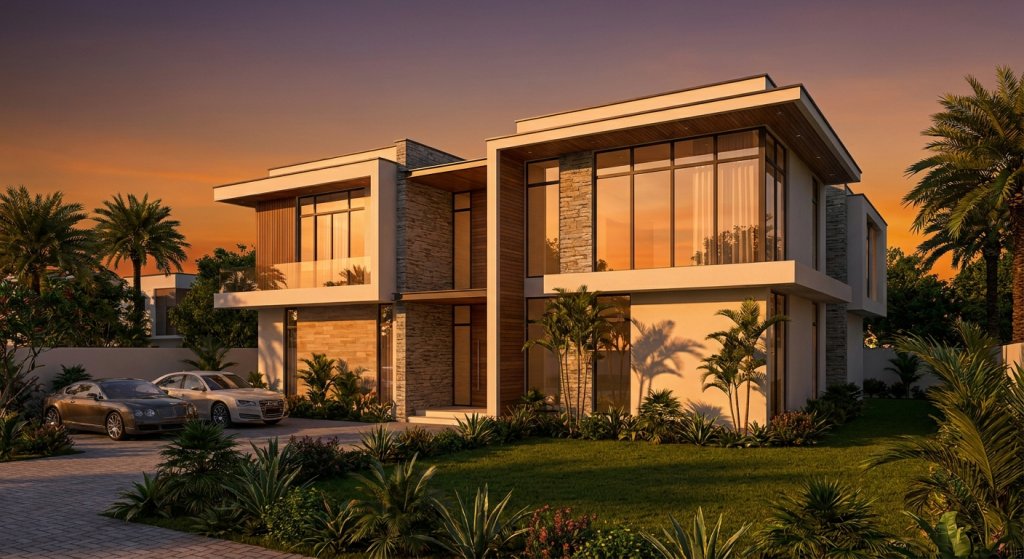
The German-brand glazed porcelain tiles the Adeyemis specified for their Oluyole Estate home became unavailable halfway through construction, forcing a substitution with Nigerian-made alternatives that Mrs Adeyemi admitted at handover looked "significantly more elegant" than the original selection.
This wasn't the only surprise in a build that stretched from 12 planned months to 19 actual months, cost ₦97.4 million against an ₦85 million brief, and taught both Imprexi and the clients lessons that no architecture firm typically shares in their portfolio highlights.
The Oluyole Estate Reality Check
Dr Adeyemi, a consultant radiologist based in Manchester, and his wife, a senior lecturer at University College London, purchased their Oluyole Estate plot in November 2025 with the confidence of seasoned professionals managing a major project from abroad. Their brief was straightforward: a 4-bedroom detached home with guest quarters, completed by Christmas 2026 for their planned permanent return to Nigeria.
What they hadn't factored into their timeline was the Regulatory Agency permit approval window, which in early 2026 averaged 9–14 weeks in Oluyole Estate—one of Ibadan's most active zones for diaspora builds. The Adeyemis hit that exact window two months into construction, and the delay cascaded through every subsequent phase.
"We'd been told Nigerian bureaucracy was improving," Dr Adeyemi reflects. "What we learned was that improvement is relative. The Regulatory Agency processed our application efficiently within their stated timeframe. The issue was that we'd budgeted for a 3-week approval based on outdated information from colleagues who'd built in Lagos."
When Good Faith Decisions Compound
The permit delay created the first domino effect, but subsequent timeline slips resulted from decisions both parties made in good faith rather than failures by either side.
Week 14: With OYBRA approval still pending, the Adeyemis opted to begin foundation work under a temporary permit to avoid losing their preferred contractor to another project.
Week 22: The couple requested upgraded electrical specifications after visiting a friend's newly completed home in nearby Bodija Estate. "The smart home integration was impressive," Mrs Adeyemi explains. "We decided it was worth the three-week delay for future-proofing."
Week 31: Supply chain issues emerged when the specified German porcelain tiles became unavailable through Nigeria's established importers. Rather than delay further, Imprexi's construction management team presented three Nigerian-manufactured alternatives.
"The substitution decision was purely practical," notes Architect Folake Ogundimu, Imprexi's project lead. "But the Nigerian tiles had a subtle texture that complemented the natural lighting better than the original specification. Sometimes constraints force better solutions."
Week 43: A two-week pause for revised structural calculations when the clients requested an expanded master bedroom balcony.
Week 52: Final electrical and plumbing inspections extended over the December holiday period.
The Honest Accounting
The final numbers tell a story that most architectural practices prefer not to publicise:
- Timeline: 19 months vs 12 planned (58% overrun)
- Budget: ₦97.4 million vs ₦85 million brief (14.6% overrun)
- Scope changes: 7 client-initiated modifications
- Permit delays: 11 weeks (OYBRA approval: 9 weeks, utilities connections: 2 weeks)
- Material substitutions: 3 (tiles, light fittings, exterior paint)
"The budget overrun sounds dramatic until you break it down," Dr Adeyemi observes. "₦8.2 million covered the electrical upgrades we requested, ₦2.1 million for the balcony extension, and ₦2.1 million for legitimate cost increases on imported materials due to naira fluctuation over 19 months."
What Both Sides Would Do Differently
Imprexi's lessons:
-
Permit timeline education: "We now provide diaspora clients with a detailed breakdown of regulatory approval timelines specific to their chosen location," explains Ogundimu. "Oluyole Estate, Bodija, and Ring Road areas each have different processing patterns."
-
Supply chain contingency: Specification documents now include pre-approved alternatives for imported materials, with samples provided during the design phase.
-
Milestone flexibility: Payment schedules now include buffer periods for regulatory delays beyond both parties' control.
The Adeyemis' perspective:
-
Timeline padding: "We'd budget 18 months for any 12-month project," Mrs Adeyemi advises. "Nigerian construction moves at Nigerian pace, and fighting that reality creates stress without accelerating progress."
-
Decision freezing: "Set a scope freeze date and stick to it," Dr Adeyemi recommends. "Every change request, however logical, extends the timeline."
-
Local partnership: "Having Imprexi's architectural design team visit comparable nearby projects during planning helped calibrate our expectations to Ibadan realities rather than Manchester standards."
The Unexpected Wins
Despite the extended timeline and budget overrun, the Adeyemis' project delivered several unexpected benefits:
The Nigerian-manufactured tiles cost 40% less than the German specification, allowing budget reallocation to upgraded bathroom fittings. The permit delay coincided with a favourable exchange rate window, reducing the dollar cost of imported materials. The extended timeline allowed the landscaping to mature before handover.
"The house exceeded our expectations," Mrs Adeyemi concludes. "The delays were frustrating during construction, but the final result justified every extended week. Imprexi's honesty about challenges built trust rather than eroding it."
The Diaspora Builder Reality
For Nigerian professionals building from abroad, the Adeyemi project illustrates that successful outcomes often require recalibrating expectations rather than demanding adherence to foreign construction norms.
"Diaspora clients arrive with reasonable expectations based on their overseas experience," notes Ogundimu. "Our role includes translating those expectations into achievable Nigerian realities without compromising on quality or safety standards."
The Oluyole Estate home was completed in March 2026, seven months behind the original schedule but meeting every quality specification. The Adeyemis moved in permanently in June 2026 and have since referred three colleagues to Imprexi for similar projects.
Ready to begin your own diaspora build with realistic expectations and transparent communication? Contact Imprexi's team at https://imprexiicdl.com/contact